An Ethnography of Cinema Spaces
The reasons why we go to cinema’s feel as if they have dramatically shifted in the last 15 years of my very short life. Memories of going to the cinema for me comprise of going with my mum and cousin, buying tickets at the cashier as well as popcorn and drinks and being genuinely excited to go and watch a brand new movie that I had no access to anywhere else. And that was the thing that was so special about going to the movies, it was the fact that I could not see that movie ANYWHERE else and the only way I could access it was if I went to a public place to sit down and watch the movie. A few years later, the world of illegally downloading movies came out and there was so need to go to the movies every time a new movie came out. All you needed to do was to have a computer and television at home. However, another few years later and the government cracking down on piracy we now also in Australia have streaming services such as netflix, stan, foxtel, hayu and many more. The new technology and idea, gives us yet another way of finding a more convenient and lazier way of watching whatever we want to watch. Therefore the value and excitement of being able to watch a brand new movie that costed millions of dollars to make became slightly less desirable.
However, although going to watch the movie itself isn’t as enticing as it was before we were able to illegally download movies that hadn’t even come out in the Australian cinema yet, going to the cinema in this day and age is still an outing that is enjoyed by a lot of us. It’s an excuse to spend time with loved ones and do something together. It is also an excuse to watch the movies in a different setting. And as human beings we love things that are different, it gives us excitement.
Going to the movies is also an activity that young people can enjoy. Such as when kids ages from 12-16 want to hang out with boys and girls, and no ones parents are cool enough to have everyone over, they immediately gravitate towards shopping centres and the movies. Although we’ve all been there, these are the annoying group of kids that will not stop talking and being disrespectful (to seem cool) throughout the whole movie until eventually the two or more people that are creating the disturbance are kicked out.
Media use in public places
Most people’s assumption when being asked the question, ‘is it legal to take photos of strangers in public?’ would be absolutely not. That’s a common assumption that we have because why would it be legal to capture somebody’s identity on something that can never be fully erased, such as a camera. The actual laws surrounding the issue do not coherently protect an individuals privacy when it comes to being photographed, videoed or watched through surveillance. In a case involving street surveillance photography used as evidence in a criminal case, an Australian judge stated “a person, in our society, does not have a right not to be photographed” (arts law centre, 2018). This illustrates the lack of policing around the right of privacy in the Australian legal system.
However with the emergence of smart phones and constant access to a camera, it creates a massive grey area. How are we able to police and set ethical and moral standards with something that has never existed in our society before? And how are we meant to keep our laws constantly applicable and updated with the fast paced evolution of technology? By the time a legislation gets enacted into our law, the technology has already moved three steps forward then what it had been when the discussions start to arise about changing the law. Thus, it is crucial that as studying the ethnography of media we are able to analyse societies interactions with a thing (media) that is brand new to the human race and closely study and observe how society will deal with it as a whole.
In reference to what the Australian judge stated that “a person, in our society, does not have a right not to be photographed” however, was in the context of a criminal case. There are also grey area’s in the law such as the Privacy Act 1988 (cth) implies that a person’s image can constitute as ‘personal information’(arts law, 2018). Australia’s common law system also relies heavily on the judges discretion, therefore depending on the circumstance and the actus rea (guilty mind) of the photo or video being taken of somebody will be the determining factor in what is criminal and what is not. Such as, most harassment and stalking claims are recognised in most state and territories statues in Australia.
There are no definitive laws in Australia that protect a persons or group’s privacy right to their own image. Although common law creates precedents for what is criminal and what is not, there are no conclusive legal right that protect and individuals or group’s privacy. In ABC v Lenah Game Meats (2001) however, the High Court did not deny the possibility that a law of unwarranted invasion of privacy may be secured in the near future. The High Court also left an open question as to whether Australian law recognises a tort of harassment or stalking.
Furthermore, human beings are diverse and multifaceted. The behaviours of individuals or groups are unpredictable and always changing. When it comes to media devices such as camera phones, the legal system has trouble keeping up with the fast paced nature of constantly upgrading technology. Therefore, taking footage of people or groups and the legalities behind it is a huge grey area as society has never had to deal with media before for hundreds of years.
Reference list
Information sheet street photographers rights, https://www.artslaw.com.au/information-sheet/street-photographers-rights/, last visited 8th of September.
Television Memory
In the society we live in today, access to a television is unquestionable. They can be inexpensive (depending on the model), and are a basic piece of household furniture, just like having a lounge in your living room.
As kids born in the 90’s, we don’t know what life would be like without having that constant access to television. The television shows we watched growing up together such as Disney Channel and ABC kids gave us all an amalgamated media identity and childhood. Upon TV memory conversations with my peers, I was able to find that a lot of the common TV stations people watched was Disney Channel and ABC kids. TV shows such as Hannah Montana, Suite life of Zach and Cody, Play school and many more were frequently brought up and talked about amongst peer’s. Furthermore, watching people interact within their memory conversation’s in a class full of people that didn’t know each other but are around the same age was interesting because I was able to see that having a topic such as TV shows to talk about instantly brought people together, highlighting that television media within our generation is a major factor in an individuals childhood growth.
Upon further TV memory conversations with my father (who is 50 years older then me), and my mother who grew up in South Korea, television media also played a big part in both their childhoods, however quite differently.
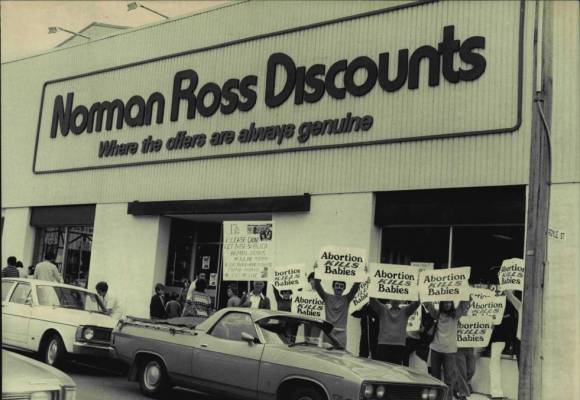
Born in 1950, my dad saw the emergence of television into middle class Australian culture. It was only in the late 1960’s that television became affordable in Australia and prior to that, you would’ve had to watch television at the local catholic club or local pub. It was also common for people to stand outside electrical shops such as Norman Ross (Harvey Norman) and watch the TV through the display glass because not many people owned a Television. The most vivid memory he has about television growing up is the TV show ‘pick a box.’ The importance of the show was that it brought people together. The show ‘pick a box’ was talked about in all social settings and was a hot topic of conversation amongst Australian society at the time. Furthermore, TV media particularly in this day and age, generated much conversation and socialising because it was new, different and exciting.

My mother was born in 1968 in South Korea whilst the cold war between the south and the north ran hot (NBCnews, Bishop, 2018). That is why ‘lucky gold star’ (LG), only made 500 televisions in 1966 that costed 60000 won, which at the time was the price of a house. However, it was not only if you were wealthy that you were able to buy a TV set but the government distributed it to people because of the political angst in which South Korea was in with the north and Japan at the time (national archives of korea, choi, 2012). Furthermore, the political feuds between the south and the north at this time was a large reason why TV’s were limited at this time.
Reference list
Bishop, MW, “North Korean ex assassin recalls 1968 when the Korean cold war ran hot”, viewed 7/08/2019, https://www.nbcnews.com/news/north-korea/north-korean-ex-assassin-recalls-1968-year-mattered-most-n840511
Choi, E, national archives of Korea, viewed 7/08/2019, http://theme.archives.go.kr/next/koreaOfRecord/television.do#subcont
 Hannah Ward